
What’s New in Gaussian 26
Generalized Internal Coordinates (GICs)
Completely general facility for describing/specifying molecular geometric characteristics, redundant internal coordinates are a subset.
Advantages:
- Much easier to optimize non-covalent bonded systems.
- Special situations can be described and constrained appropriately.
- Fragments handled very well.
- Scans can be done over complex parameters.
Some examples:
- Monitor/constrain the “center” of multiple groups of atoms to describe how they move with respect to one another.
- Average distance between sites of interest in not-quite-symmetric systems.
- Symmetry adapted coordinates (automatic on request).
Anharmonic Raman
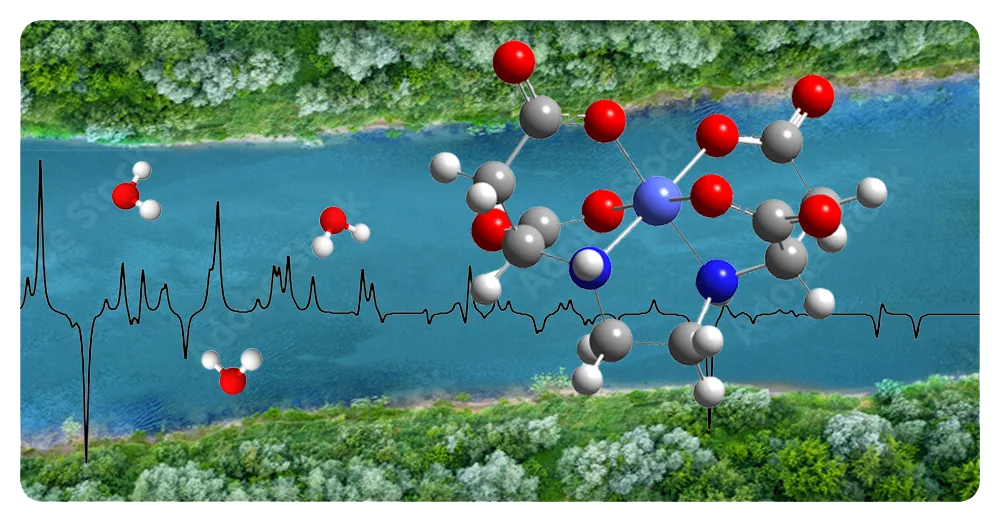
- Raman and ROA intensities via
anharmonic treatment of vibrations - Metal removal in water via ….
DFT Capabilities
Additional recent functionals
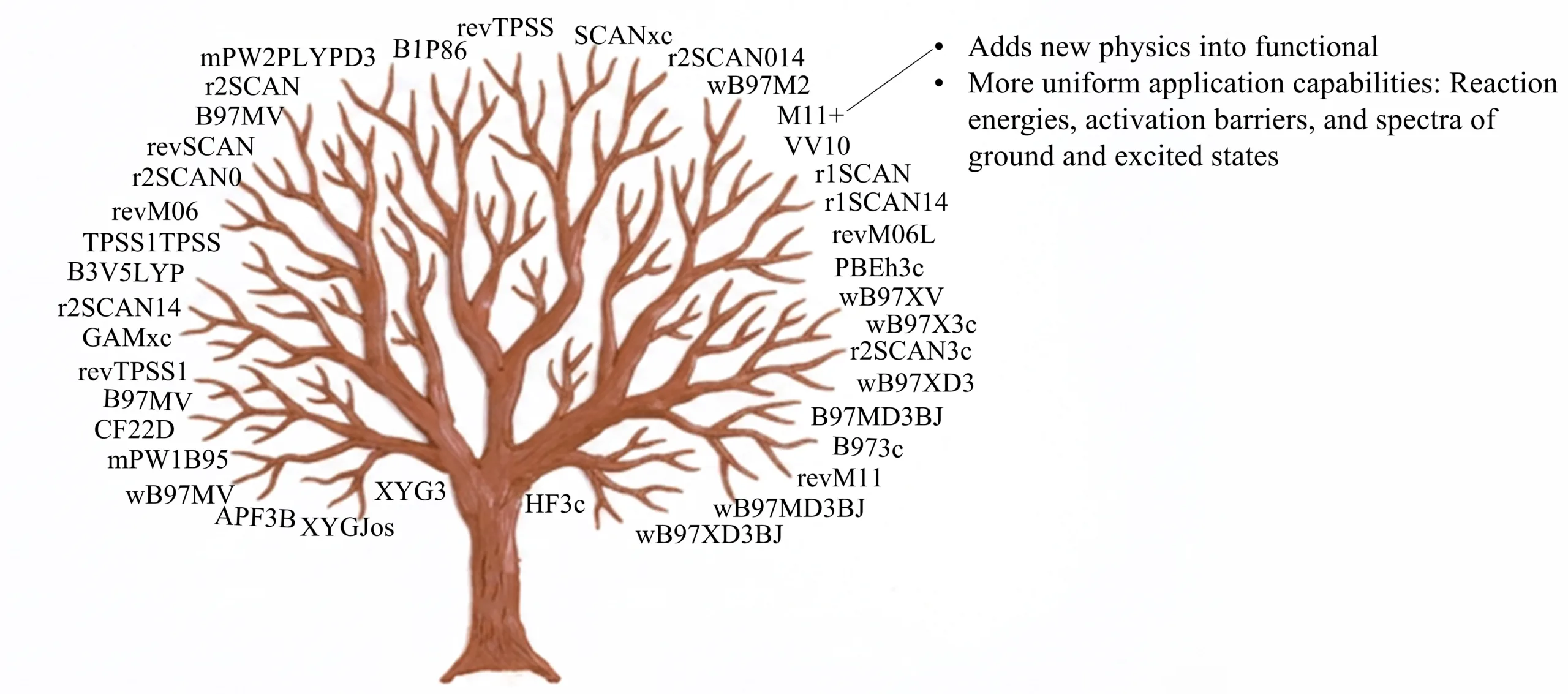
New double-hybrid functionals: RSX0DH, RSXQIDH, SCS-MP2,revDSD-PBEP86-D3, revDSD-PBEP86-D4
New treatments of empirical dispersion: D4, XDM
Molecular Dynamics
Predicts how atoms in a molecular system move over time via a potential function: “force field”.
MD traditionally assumes motions of nuclei and electrons can be treated separately: Electrons react instantaneously to nuclear motions, and nuclei are classical point particles.
Computes trajectories, molecular motion in small time steps, and statistical analysis to yield rates of reaction, isomerization, product distributions, etc.
New methods go beyond the Born-Oppenheimer Approximation: time-dependent Schrödinger equation:
HΨ(r,t)=EΨ(r,t)
Ring Polymer MD
- RPMD: Treats all nuclei quantum mechanically
- Uses path integral QM formalism
- Wavefunction is superposition over those paths
- Allows QM treatment of nuclear motion involving more than just H: e.g., C–C
Ehrenfest Dynamics
- Electrons do not respond instantaneously, but rather evolve in time simultaneously with nuclei.
- Models the lifetime and behavior of an electronic state.
NEO
- Nuclear-electronic orbital method: Allows some nuclei to behave quantum mechanically.
- Treats some/all protons via QM like the electrons.
- Wavefunction is the product of the determinant for the electrons and a HF-like determinant for each QM proton.
- Useful for MD when QM is important to the physics of the nuclei.
Polarized QM/MM with Tinker
- Tinker: MM program with polarizable force field allowing MM charges to react to the environment
- Interfaced to Gaussian via GauOpen
- Gaussian computes QM part and polarized charges
- Tinker computes remainder of force field interactions and
controls the dynamics
Excited States Features
- EOM-CC ionization potentials, e.g., closed shell ground state to pure doublet
- State-following during optimizations
and other calculations - TDDFT: change of basis set
CASSCF Implementation
- Complex, non spin-aligned wavefunctions
- Treats coupling of electron spins (ignored by, e.g., DFT)
- Energies and gradients
- Allows treatment of, e.g., open shell systems with many electrons in the open shell orbitals
GHF Complex Wavefunctions
- Incorporates treatment of spin orbit in single determinant SCF and DFT wavefunctions
- Enables modeling of systems for which spin orbit is important (e.g., transition metals)
- More general and less expensive than CASSCF treatment for appropriate contexts (e.g., geometry optimizations)
Other Capabilities
- Automated disjoint ONIOM high level computation handled automatically.
- Performance improvements, including substantial, across the board under Windows, NMR with double hybrid functionals, ECPs with spin orbit terms.